Quiet Company: Designing a Low-Pressure Evening for Introverted Clients

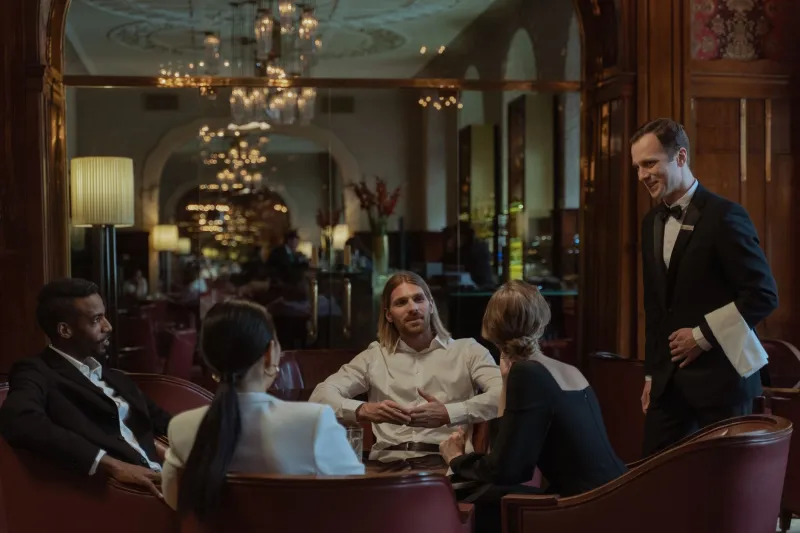
Photo: quiet intimate restaurant booth conversation two people evening, via www.comingsoon.net
There is a persistent assumption in the companionship market that a good evening must be visibly eventful. The venue should be impressive, the conversation should sparkle, the client should be charming, and the companion should be constantly engaging. For some clients, that is exactly right. For others, especially those who are introverted or socially reserved, it is a recipe for exhaustion. The irony is that the clients who most need easy company are often the ones least served by high-pressure formats.
This playbook is for the reserved client: the person who prefers a quieter table, a slower conversation, and an evening that does not require him to become a more extroverted version of himself. It is also for the companions who work with such clients. The goal is not to create a dull evening. The goal is to create a low-pressure one, where connection has room to happen without being forced.
Start Before the Meeting: State the Temperature
The most useful thing an introverted client can do is communicate his preferred pace before the engagement. This does not need to be a confession. It can be a simple preference note: I prefer a quieter venue, I am not much for loud bars, I warm up slowly, and I would rather have one good conversation than a packed schedule. A professional companion can work with that information. She cannot work with a preference that was never stated and then silently resented.
Specificity helps. Instead of saying 'I am introverted', say what you actually want. Do you prefer a seated dinner to a standing reception? Do you want a plan with one activity rather than three? Do you prefer to start with a drink and see how the evening goes? These are practical instructions, not personality flaws. They also give the companion permission to stop guessing.
Choose a Venue That Does Half the Work
Venue selection is the quiet client's best tool. A loud room forces conversation into a shout. A high-status room can make a reserved person feel like he is being watched. A crowded event demands social performance. The better choice is usually a place with soft acoustics, comfortable seating, and enough privacy to talk without feeling exposed.
In Batumi, that might mean a quiet corner of a hotel lounge, a small table at a restaurant that is not trying to be a scene, or a walk along the promenade at an hour when the crowd has thinned. In a US city, the equivalent might be a neighborhood bistro, a hotel bar with actual booths, or a gallery on a weekday evening. The point is not luxury for its own sake. The point is a setting that reduces the amount of social labor required from both people.
Conversation Starters That Do Not Feel Like Auditions
Introverted clients often dread the opening ten minutes because they feel like an audition. The companion asks questions, the client answers, and the whole exchange starts to resemble a job interview with better lighting. The way out is not to prepare a list of impressive topics. It is to choose questions that make room for honesty.
Good starters are concrete and low-stakes: What is the best thing you have eaten this week? What part of the city do you actually enjoy? Are you a planner or do you decide as you go? These questions do not demand a performance. They also give the companion something real to respond to. If the client is naturally funny, the humor will arrive later. If he is naturally thoughtful, the thoughtfulness will have a chance to show. Introverts tend to open in layers, not on command.
Pacing: The Art of Not Filling Every Silence
A common mistake in low-pressure engagements is treating silence as a problem to be solved. The host feels responsible for the energy, so he fills every gap with a question. The client feels responsible for being entertaining, so he fills every gap with a fact. The result is a conversation that feels like a treadmill. A better rhythm is to let the evening have natural pauses.
Pacing also means not rushing the plan. If the client has booked two hours, not every minute needs a new activity. One good conversation at a good table can carry an evening. If the client is visibly tiring, the companion should be able to adjust without treating it as a failure. The best low-pressure evenings are often the ones with the fewest moving parts.
Exit Etiquette: Leave Before the Evening Gets Thin
For introverted clients, endings matter. A long goodbye can undo a good evening. The client may be ready to leave before he knows how to say so, and the companion may be unsure whether to extend or wrap up. The solution is to build a graceful exit into the plan from the beginning. A simple arrangement works well: a fixed end time, with the option to extend only if both people are genuinely inclined.
When the evening ends, keep the goodbye warm and brief. Do not over-explain why you are leaving. Do not turn the exit into a referendum on how well the evening went. A clear thank-you is enough. If the client wants to book again, he can say so later, when he is not standing in a doorway trying to manufacture the perfect closing line.
A Simple Template for the Reserved Client
A workable low-pressure evening might look like this: one confirmed venue, one drink or meal, a two-hour window, and no expectation of a second location. The client states his preference for quiet and slow pacing beforehand. The companion chooses a table rather than a bar stool. The conversation begins with something concrete and low-stakes. Pauses are allowed. The exit is agreed upon in advance and executed without ceremony.
None of that is boring. It is simply designed for a different kind of connection. For introverted clients, the most memorable evenings are often the ones where they did not have to perform. The companion's real skill is not filling the room with energy. It is making the room feel safe enough that the client can stop bracing and start talking.