Cooler Months, Fuller Attention: The Case for Off-Season Batumi
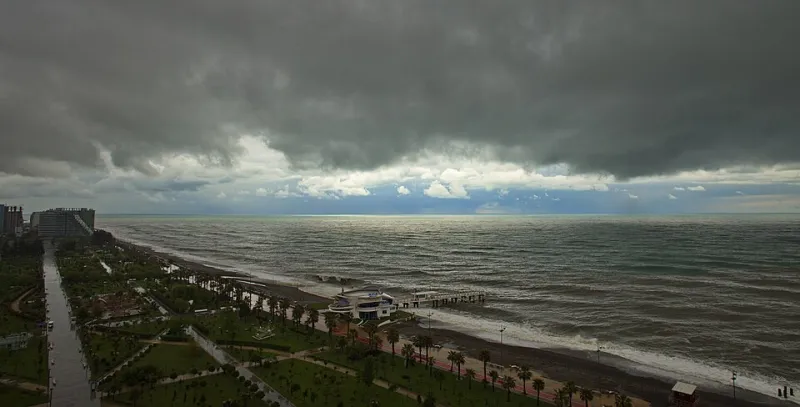
Photo: Boris Kuznetsov, CC BY 2.0, via Wikimedia Commons
Ask an American traveler to picture Batumi and you will usually get July: the boulevard at dusk, the beach clubs at capacity, the subtropical heat pressing down on the promenade until well after midnight. It is a genuine pleasure and a well-earned reputation. It is also, for a certain kind of client, the least interesting version of the city.
Between roughly October and April, Batumi becomes a different place — cooler, quieter, and considerably more accommodating to visitors who value unhurried company over crowded terraces. For discerning clients planning a first or return engagement in the Black Sea region, the off-season is not a compromise. It is frequently the better booking.
Why the Calendar Matters More Than the Thermometer
Batumi sits in a humid subtropical belt, which means winter is mild by American standards: days in the forties and low fifties Fahrenheit, occasional rain, very little snow at sea level. This is not a hardship destination. It is a city that continues to function comfortably while the summer crowds thin out.
The more consequential shift is operational. In high season, the best venues run at capacity, schedules compress, and every arrangement is competing with a dozen others for the same evening. In the cooler months, the same venues open with space to spare, and the professionals who work the region year-round can devote genuine attention to a single booking rather than fitting it between obligations.
For clients accustomed to the transactional density of large American markets, that difference is immediately legible.
The Scheduling Dividend
Off-season bookings tend to be confirmed earlier and adjusted more easily. A client planning a long weekend in November or a week in March will generally find more flexibility around arrival times, dining reservations, and the shape of an evening than one negotiating the same requests in August.
This has a practical benefit that is easy to overlook: it allows for a slower first meeting. Where summer schedules encourage compression, the cooler months permit an engagement built around a proper dinner, a walk along the boulevard without elbowing through crowds, and conversation that is not competing with a sound system.
Advance planning remains essential. The advantage of the off-season is not spontaneity; it is the room to plan properly without being punished for it.
Quieter Rooms, Sharper Service
The restaurants, wine bars, and hotel lounges that define Batumi's better evenings are at their most polished outside the peak. Staff are less harried, tables are spaced more generously, and the ambient noise that makes summer conversation a shouting match drops to something civilized.
Several of the city's stronger rooms — the hotel dining rooms in particular, along with the quieter wine-focused venues set back from the seafront — are markedly better suited to a two-person engagement in February than in July. The same holds for spa and wellness facilities, which in summer operate on a queue and in winter operate on a schedule.
Clients who have visited in both seasons tend to describe the same contrast: in summer you see Batumi; in winter you can hear it.
The Value Question, Handled Honestly
Off-season travel to the region is generally more economical, though it would be inaccurate to frame the appeal as a bargain. Accommodation rates soften, airfare from US gateways is often more flexible, and the general cost of an evening out eases. Those savings are real.
The honest framing, however, is that value here is measured in attention rather than discount. A booking made in a quiet month tends to receive more of the planning, more of the pacing, and more of the unallocated time that makes an engagement feel considered rather than scheduled. Clients who chase a lower rate alone will miss the point.
Dressing and Planning for Cool Weather
The practical considerations are modest but worth rehearsing. Batumi's winter dampness makes layers more useful than heavy coats; a well-cut wool overcoat, a scarf, and shoes that can handle wet pavement will serve better than the parka appropriate to a Chicago January. Evenings by the water cool quickly, and the wind off the Black Sea is a real factor after dark.
Plan the shape of an evening around indoor transitions: dinner, then a bar or lounge within a short walk, rather than a long promenade. Choose venues with proper cloakrooms. Build in a driver or a booked car for the return leg rather than relying on availability at eleven at night in a quiet month.
Etiquette for a Cool-Weather Engagement
Three courtesies distinguish a well-planned winter booking.
Confirm earlier than you think necessary. Off-season does not mean empty; it means less crowded. Establish the date, the duration, and the general plan several weeks out, and reconfirm a few days before arrival.
Respect the season's pace. A cool-weather engagement in Batumi rewards a longer, slower arc — an early dinner, a second venue, an unhurried close — rather than a packed itinerary borrowed from a summer visit.
Be explicit about weather contingencies. A rain plan agreed in advance is not pessimism; it is competence. Propose the alternative before it is needed and the evening never has to be rescued.
A Note for First-Time American Visitors
The journey from the United States typically routes through Istanbul or another European hub, and the final approach into Batumi is short. Many first-time visitors underestimate how much a full travel day compresses an arrival evening. Booking a light first night — a drink, a meal, an early close — and reserving the more substantial engagement for the second evening is a pattern experienced travelers return to repeatedly.
The same applies in reverse. Departure days are unreliable, and a booking scheduled against a late flight introduces avoidable pressure into an otherwise well-composed trip.
The Argument, Restated
Summer in Batumi is a spectacle, and there is nothing wrong with wanting to see it. But a client seeking company rather than crowds, conversation rather than volume, and a schedule that bends rather than breaks will find the cooler months unusually generous.
The city does not close. It simply lowers its voice — and for a certain kind of evening, that is precisely the point.